
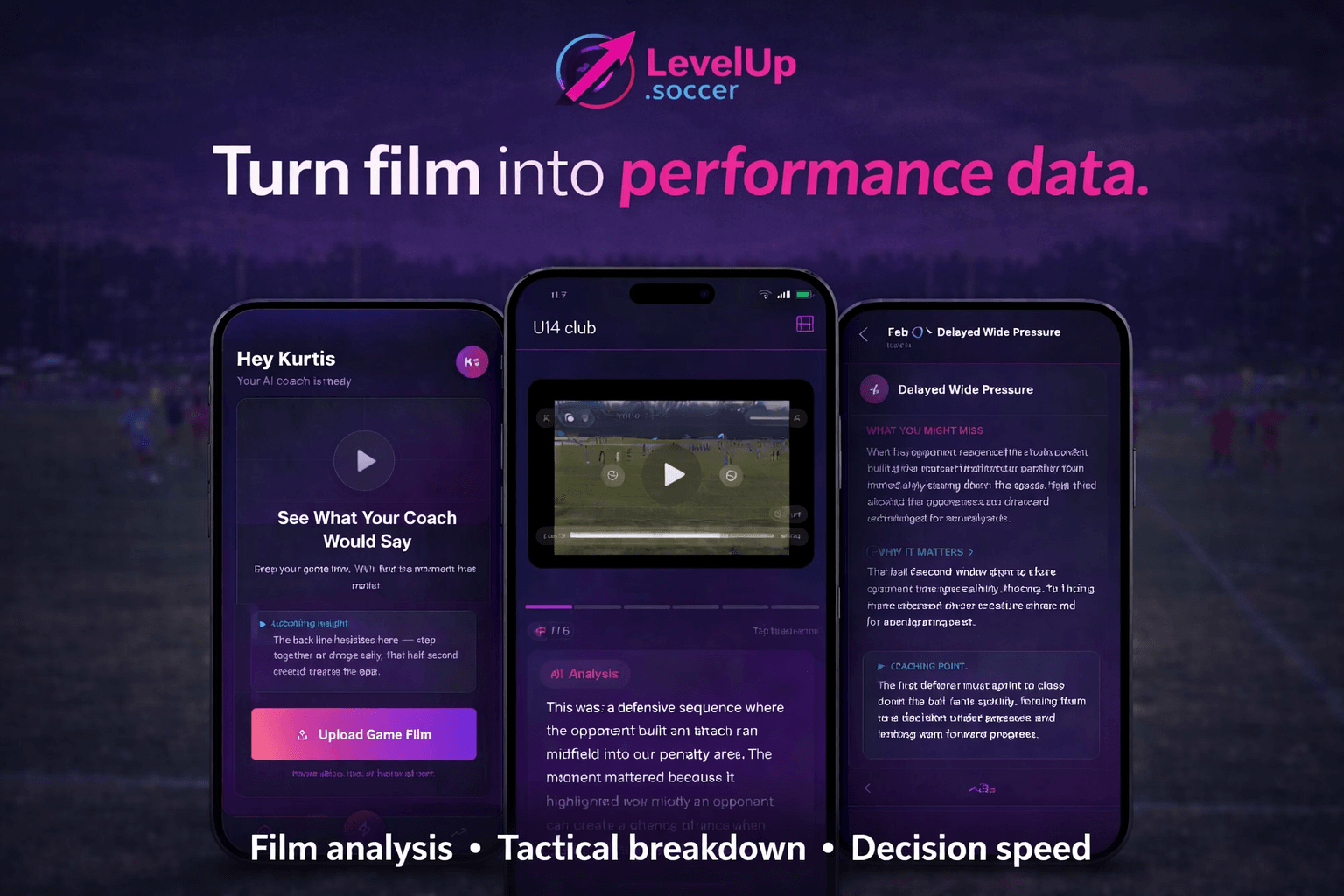
Most youth players rewatch goals.
Elite players rewatch decisions.
There's a difference.
Parents film every game. Phones are out. Veo cameras are rolling. Drives are full of clips.
But here's the uncomfortable truth:
Watching film without structure doesn't create improvement.
It creates familiarity.
And familiarity isn't development.
The Highlight Trap
When players rewatch games on their own, they tend to look for:
- Goals
- Assists
- Big defensive wins
- Moments they looked good
They rarely pause to ask:
- Was my positioning correct?
- Was my recovery run late?
- Was there a better passing option?
- Did I scan before receiving?
Development doesn't live in the highlights.
It lives in the micro-decisions.
Why Coaches Can't Solve This
Club coaches:
- Manage 16+ players
- Focus on team tactics
- Don't have time for individual clip breakdowns
That's not a criticism. It's reality.
Most players never receive consistent, structured, moment-by-moment review.
So growth slows.
The Real Gap in Youth Development
Training builds repetition.
Games expose decision-making.
But without structured feedback, those decisions go uncorrected.
That's why players plateau around U12-U14.
They work hard.
But they don't see what they're missing.
What Structured Film Changes
When you analyze a 15-second game moment properly, you can identify:
- Defensive shape breakdown
- Slow transition reaction
- Missed support angle
- Late pressure
- Poor scanning before receiving
One small correction, repeated over weeks, compounds into major growth.
Film isn't about reliving the game.
It's about extracting data from it.
The Bottom Line
If you're filming every game...
But not analyzing decisions...
You're documenting memories.
Not building performance.
Film becomes powerful when it becomes feedback.
And feedback changes players.
Turn Film Into Feedback
Upload your next game clip and get structured AI analysis that breaks down the decisions, positioning, and patterns you cannot see in real-time.